
Key takeaways
- The charger rate, vehicle capability and home supply need to be considered together.
- A supply upgrade is a separate decision from installing a charger on an existing suitable supply.
- Charging routine can matter as much as maximum charging speed.
What the supply type changes
The available supply affects the charging options that can be considered, but the nameplate rate is not the same as the rate a vehicle will actually use. The vehicle, charger settings, protection and property supply all place limits on the outcome. That is why a charger selection made from a product page alone can be the wrong starting point.
Your charging routine matters
If the car is home for several hours or overnight, a lower charging rate may meet the household routine without a supply upgrade. If the car needs repeated fast turnarounds or multiple vehicles share one property, a higher-capacity design may be worth assessing. The answer should follow the use case, not a generic “three-phase is better” rule.
What a site assessment checks
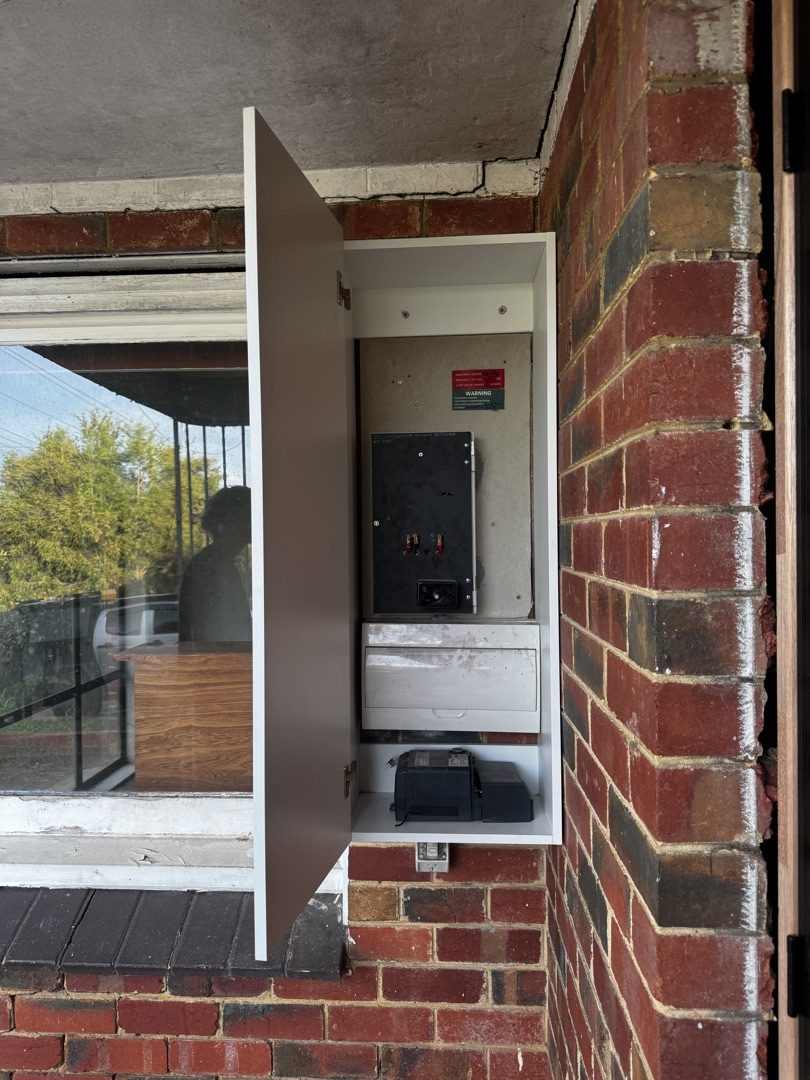
The assessment should check the existing supply and metering, switchboard condition, protection, charger location, cable route and any other large loads that operate at the same time. It should also confirm the vehicle and charger requirements. Only then can an electrician separate an ordinary charger installation from a supply or switchboard project.
Questions to ask before choosing hardware
Ask how much charging the vehicle needs each day, how long it is parked, whether the property already has three-phase supply, where the charger will be mounted and whether the board has room for the required protection. These answers make a quote more useful and reduce the chance of buying hardware that the property cannot use as expected.
Frequently asked questions
Can a home EV charger work on single-phase power?
It may, depending on the charger, vehicle, existing supply and installation conditions. The charging routine and property assessment should be checked before a supply upgrade is assumed.
Does three-phase power always charge an EV faster?
Not necessarily. The usable result is limited by the vehicle, charger and installation, as well as the supply. The maximum possible rate is only one part of choosing an appropriate setup.