
Key takeaways
- Start with the parking space and building approval pathway, not a charger model.
- The route from the switchboard or supply point to the bay can shape the installation scope.
- Shared infrastructure needs a fair way to manage capacity, access and electricity use.
Start with the building, not the charger
In a strata building, the wall, ceiling, car park and electrical equipment may not all belong to the individual apartment owner. A resident should check the scheme rules and speak with the owners corporation or building manager before arranging work on shared property. The aim is to agree on the location, route and responsibilities before anyone prices the installation.
Map the parking bay and cable route
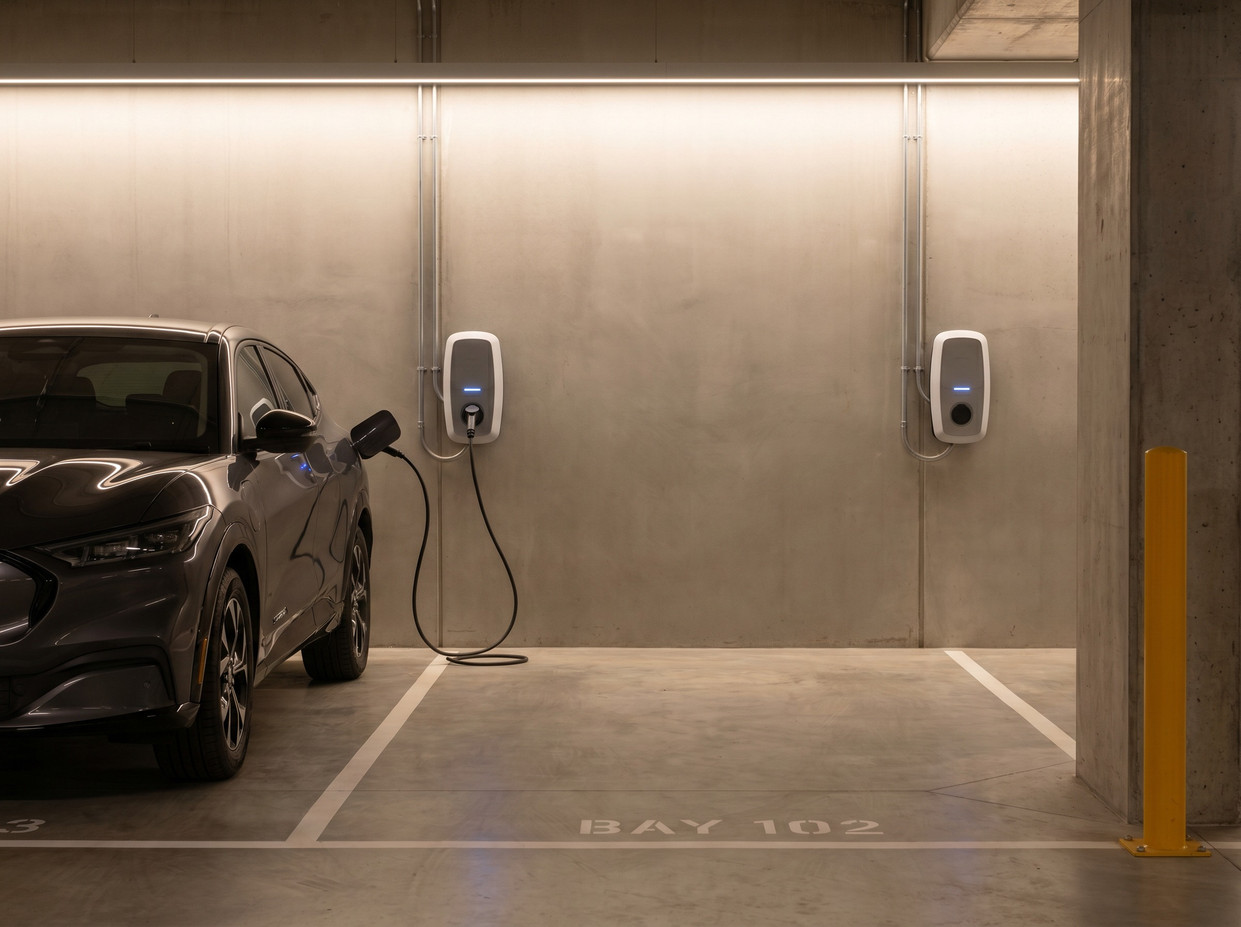
The proposed bay, the nearest suitable supply point, fire and access paths, protection from vehicle impact and the length of the cable route all matter. A site assessment should record these constraints rather than assume that an apartment can be connected from the nearest visible power point.
Plan capacity and electricity use
One charger may be straightforward; multiple chargers need a plan for available capacity, charging priorities and who pays for electricity. The building may need an agreed approach to future residents as well as the first installation. Any load-management or metering proposal should be explained in plain language before approval.
What to bring to an owners corporation discussion
Bring a marked-up plan of the bay and cable route, the proposed charger information, the electrical assessment, a clear scope of work, access and maintenance responsibilities, and the proposed method for measuring electricity. This gives the committee a decision it can assess instead of a hardware request with the difficult questions left for later.
If the first request is refused
A knock-back is not always the end of the road. Owners corporations sometimes decline an ad-hoc request but are open to a broader EV-readiness policy that covers the same job under clearer rules, so it can be worth asking whether the committee would prefer a policy submission over a one-off approval. Coming back with a tighter proposal that answers the capacity, metering and access questions up front is usually more productive than resubmitting the same request unchanged.
Timing and getting through committee
Strata approvals move at the pace of the scheme’s meeting cycle, not the electrician’s. Build in time for the committee or owners corporation to review the proposal, ask questions and, where required, put it to a vote. Getting the paperwork right the first time, with the plan, assessment and metering approach all included, is usually a faster path to an installed charger than resubmitting a revised proposal at each meeting.
Frequently asked questions
Do I need permission to install an EV charger in a strata building?
You may need approval when the proposal affects shared property, common electrical infrastructure or other residents. Check the scheme rules and current Victorian guidance before arranging work.
What does a strata EV assessment need to cover?
It should cover the parking bay, cable route, supply and switchboard, protection, access, future capacity, metering and maintenance responsibilities. The exact scope depends on the building.