
Key takeaways
- Safety switches help protect people from electrical faults; circuit breakers protect circuits from overcurrent.
- Flickering lights, sparks, an old board or repeated tripping are reasons to arrange an assessment.
- Test installed safety switches as directed and call a licensed electrician if a test does not work as expected.
Safety switch versus circuit breaker
A safety switch monitors the flow of electricity and can disconnect a circuit when it detects a dangerous imbalance. A circuit breaker is designed to protect wiring and equipment from excessive current. They are related parts of electrical protection, but one is not a substitute explanation for the other.
Warning signs worth taking seriously
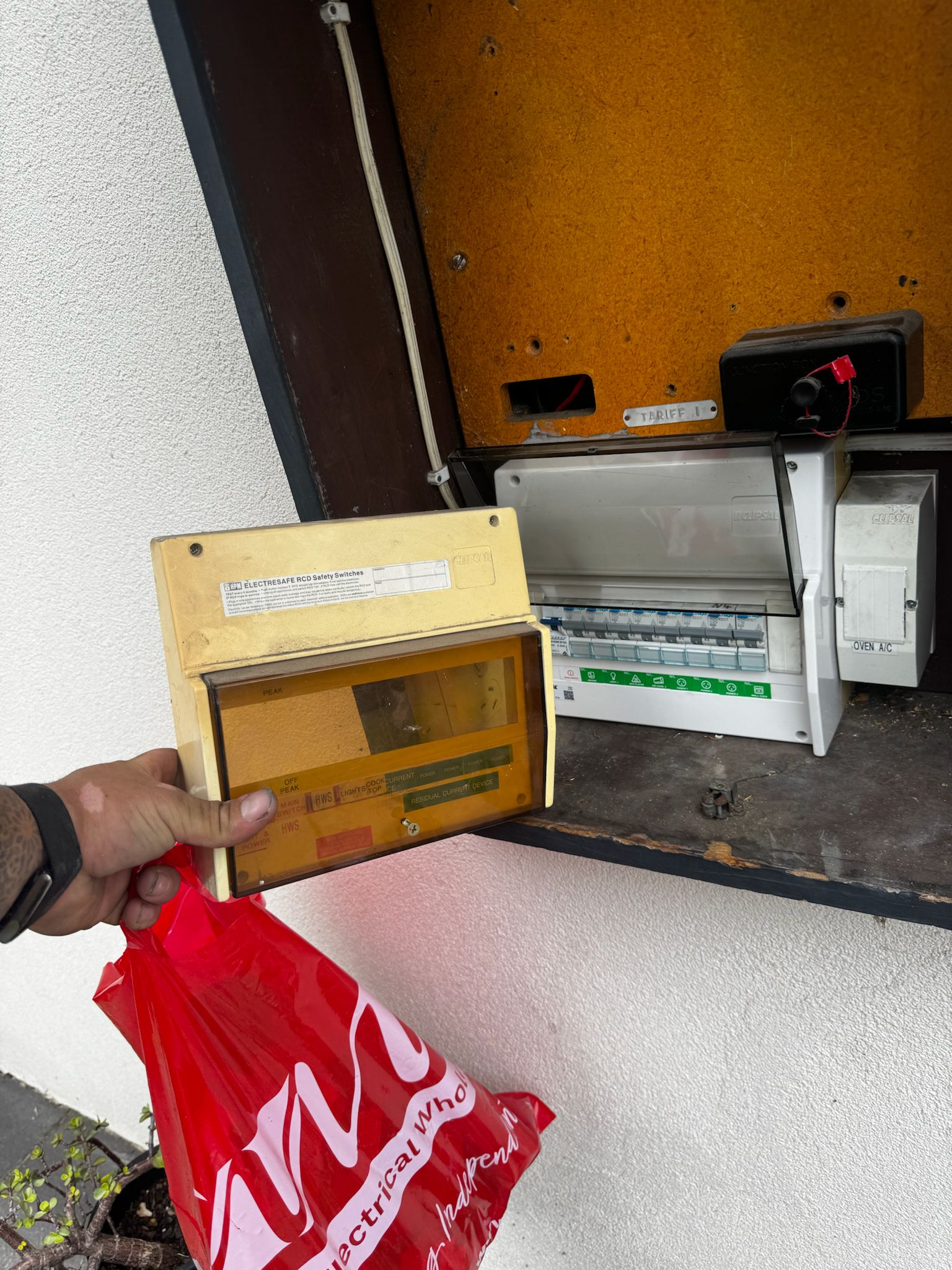
Energy Safe Victoria highlights old switchboards without safety switches, flickering lights, sparks and old or damaged switches as signs that wiring may need attention. Repeated tripping, buzzing, heat or scorch marks around a board should also be treated as a reason to stop guessing and arrange a professional inspection.
Testing a safety switch
Energy Safe Victoria recommends testing safety switches every three months. Tell people in the home before testing, press the test button, confirm the relevant power is off and reset the switch. If the expected circuits do not lose power, or the switch will not reset, contact a licensed electrician rather than continuing to use the test as a diagnosis.
What an assessment should cover
An electrician can identify the protection already installed, look for damaged or overheated equipment, assess available space and discuss the extra load from projects such as EV charging, air conditioning or home electrification. The correct scope depends on the property; a blog post cannot certify the installation from a photograph.
What happens if an assessment finds a problem?
If an assessment finds missing safety switches, damaged components or a board that is at or near capacity, the electrician should set out the options in order of urgency, from adding safety switches to existing circuits through to a full switchboard upgrade, so you can make an informed decision rather than being told to replace everything at once. Not every finding needs the whole board replaced immediately; sometimes targeted work resolves the immediate risk while a larger upgrade is planned for later.
Why testing and capacity matter over time
A safety switch that worked when it was installed can still fail years later, which is part of why regular testing is recommended rather than a one-off check. Older boards are also more likely to sit near or over their original capacity as households add air conditioning, EV charging or other higher-draw appliances, so a board that was adequate a decade ago is worth revisiting rather than assuming it still has headroom.
Frequently asked questions
What does a safety switch protect against?
A working safety switch monitors a circuit and can cut power when it detects an electrical fault that may put people at risk. It must be installed on and connected to the relevant circuit to provide protection.
How often should I test a safety switch?
Energy Safe Victoria recommends testing safety switches every three months. Follow the current official guidance and arrange an electrician if the test does not behave as expected.