
Key takeaways
- Start with the areas you need to protect, then choose camera positions and equipment around that goal.
- Cabling, access, recording and network setup can be as important to the scope as the cameras themselves.
- A useful quote identifies locations, storage assumptions, setup work and exclusions.
The main cost factors
A small system covering an entry and driveway has different requirements from a larger system covering several sides of a property. Camera type, low-light performance, viewing angle and mounting position should follow the area that needs useful coverage rather than a target camera count.
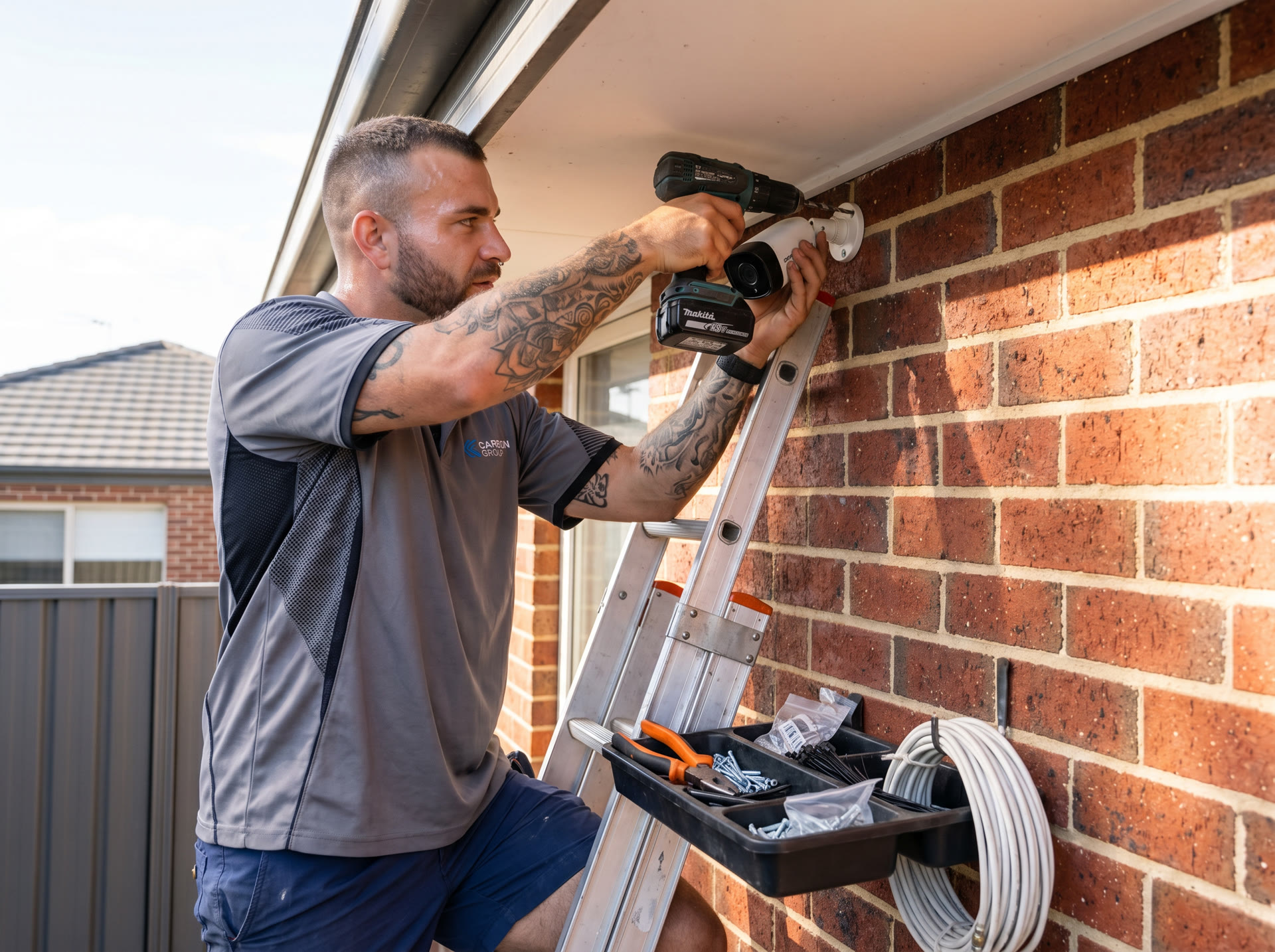
A clean, short cable route is generally simpler than a route through a roof space, external wall or difficult access area. Brickwork, multiple levels and high mounting points can change labour and equipment requirements.
Recording, storage and remote viewing
Ask where footage is recorded, how long it is retained under the proposed settings, how it is exported and what happens if the internet connection fails. Local recording and cloud features have different equipment and subscription implications.
Remote viewing may require network configuration, user access, updates and a reliable connection. Ask who completes the setup and what support is included after installation.
What should a CCTV quote include?
A useful quote should identify camera locations, equipment, recording method, storage assumptions, cable routes, power requirements, installation work, commissioning and user setup. It should also list exclusions, such as network upgrades or remedial building work, so the proposal is easy to compare.
Before booking, decide what you need the system to do: alert you when a person enters a driveway, provide evidence after an incident, cover a gate or give general visibility around the property. Those objectives help determine camera placement and recording settings.
Typical camera placements around a property
Most residential systems in Melbourne cover a handful of key zones rather than every angle of the property: the front entry, driveway or carport, side access gates, and any rear entry that is not overlooked from the street. Commercial sites often add coverage of loading areas, stock rooms, staff entries and car parks. Working out which of these zones matter most to you before you get quotes makes it much easier to compare proposals, because you are comparing coverage of the same areas rather than just a camera count.
Getting quotes you can actually compare
Get more than one quote in writing, and ask each installer to work from the same list of zones and objectives so the proposals are apples-to-apples. Beyond the equipment and cabling, ask what happens if a camera fails or a recording setting needs adjusting after handover, whether the installer will walk you through the app, and how firmware or software updates are handled over time. A clear, itemised quote with defined inclusions and exclusions is easier to compare than a single lump-sum figure.
Frequently asked questions
Does a CCTV system with more cameras always cost more to install?
More equipment can add to the scope, but camera count is only one factor. Cable routes, access, recording, network setup and the required viewing angles also affect the work involved.
Should CCTV installation include app and recording setup?
Ask for commissioning, recording settings, user access and app setup to be listed clearly in the quote, along with any network work or ongoing subscription exclusions.